SemStream: Semantic Boundary-Aware Memory for Streaming Video Understanding
ACM MM 2026
Abstract
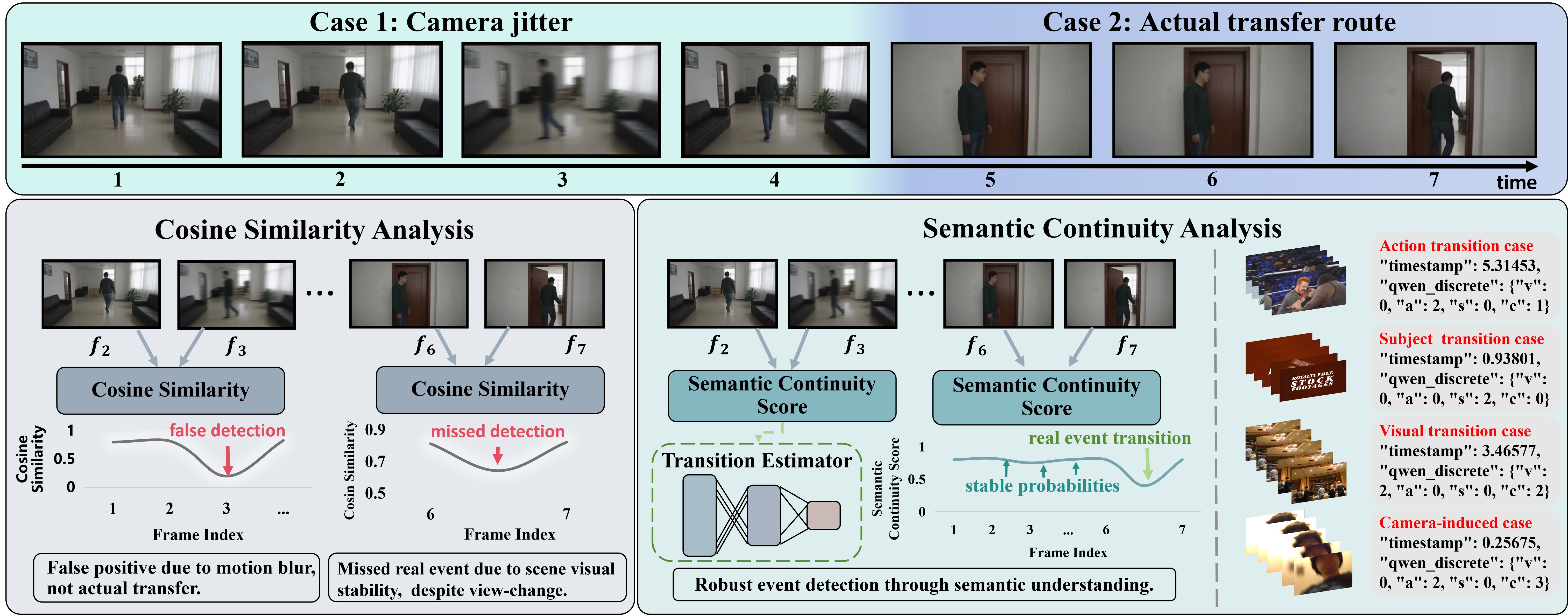
Processing continuous video streams requires multimodal large language models (MLLMs) to maintain temporally coherent memory. Existing architectures predominantly rely on heuristic feature similarity, such as cosine similarity, for memory updates, making them blind to high-level semantics and susceptible to catastrophic fragmentation from camera ego-motion. To overcome this, we construct SemBound-1K, a multi-dimensional soft-labeled dataset that factorizes video boundaries into visual, action, and subject transitions while explicitly penalizing camera noise. Building upon this foundation, we propose SemStream, an intent-driven streaming architecture realized through semantic boundary-aware memory management. SemStream replaces heuristic matching with a learned Semantic Continuity Controller (SCC) for dynamic event partitioning, and employs a Budgeted Episode Merger (BEM) for long-term memory consolidation under strict token constraints. Extensive experiments demonstrate that SemStream achieves state-of-the-art performance, with accuracies of 78.6% on StreamingBench, 74.1% on MLVU, and 62.3% on ODV-Bench. By natively modeling semantic transitions, SemStream effectively prevents memory fragmentation, enabling robust long-horizon reasoning in complex, unconstrained real-world environments.
Overview of SemStream
SemStream organizes incoming visual tokens through three cooperative components: Boundary-Governed Hierarchical Memory, the Semantic Continuity Controller, and the Budgeted Episode Merger.
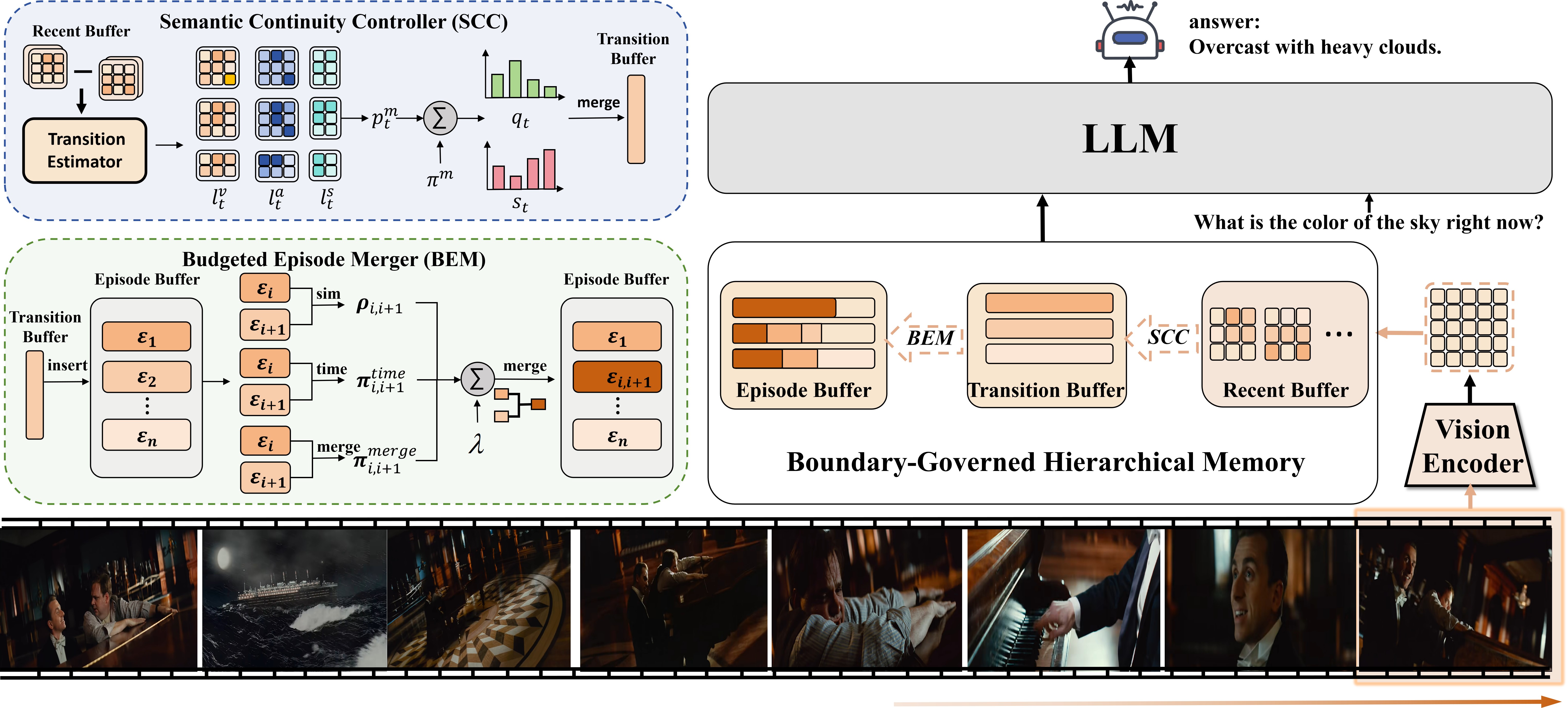
The hierarchical memory maintains recent, transition, and episode buffers. SCC predicts multi-dimensional semantic continuity scores from adjacent frames to detect event boundaries, while BEM consolidates historical episodes under a fixed token budget.
SemBound-1K
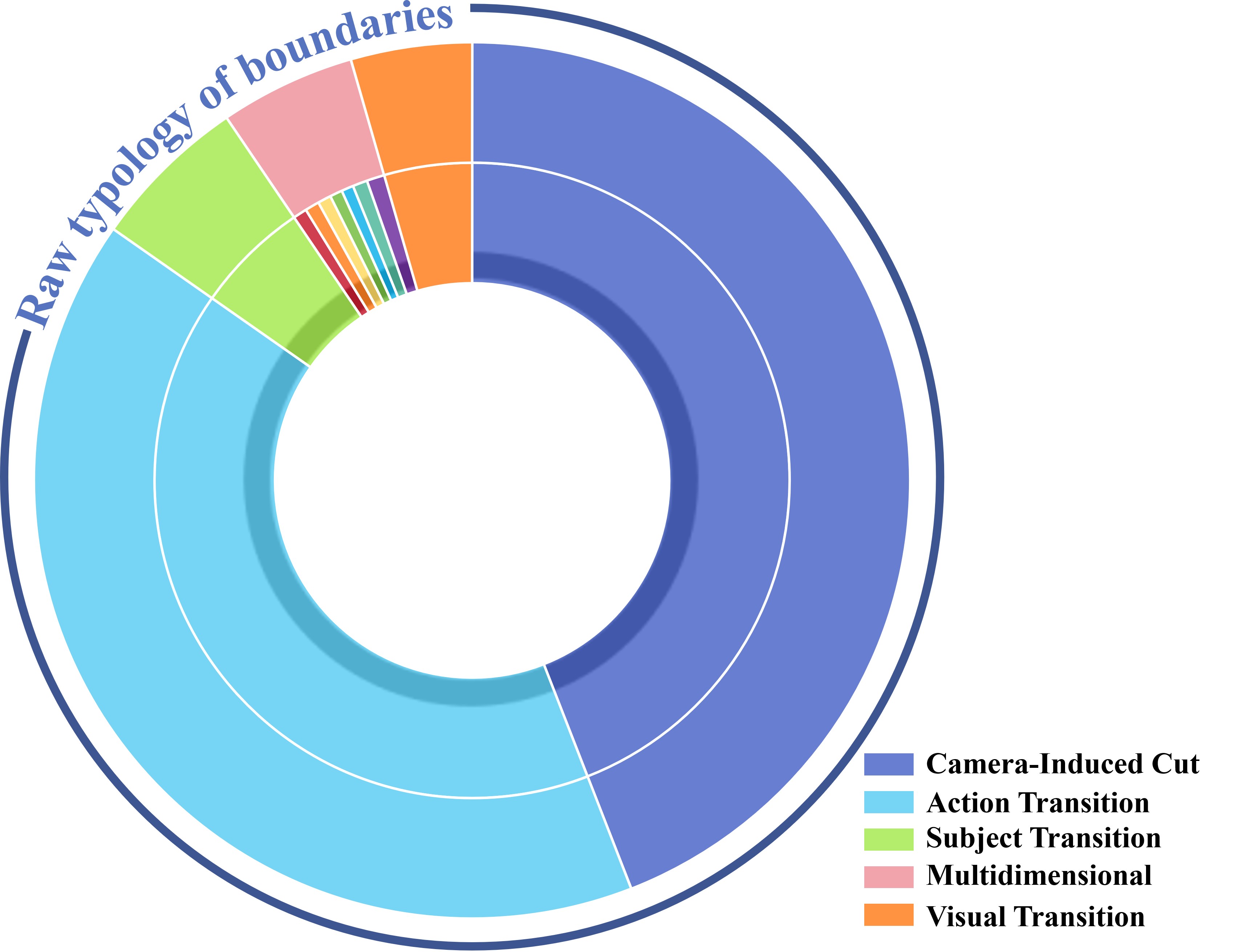
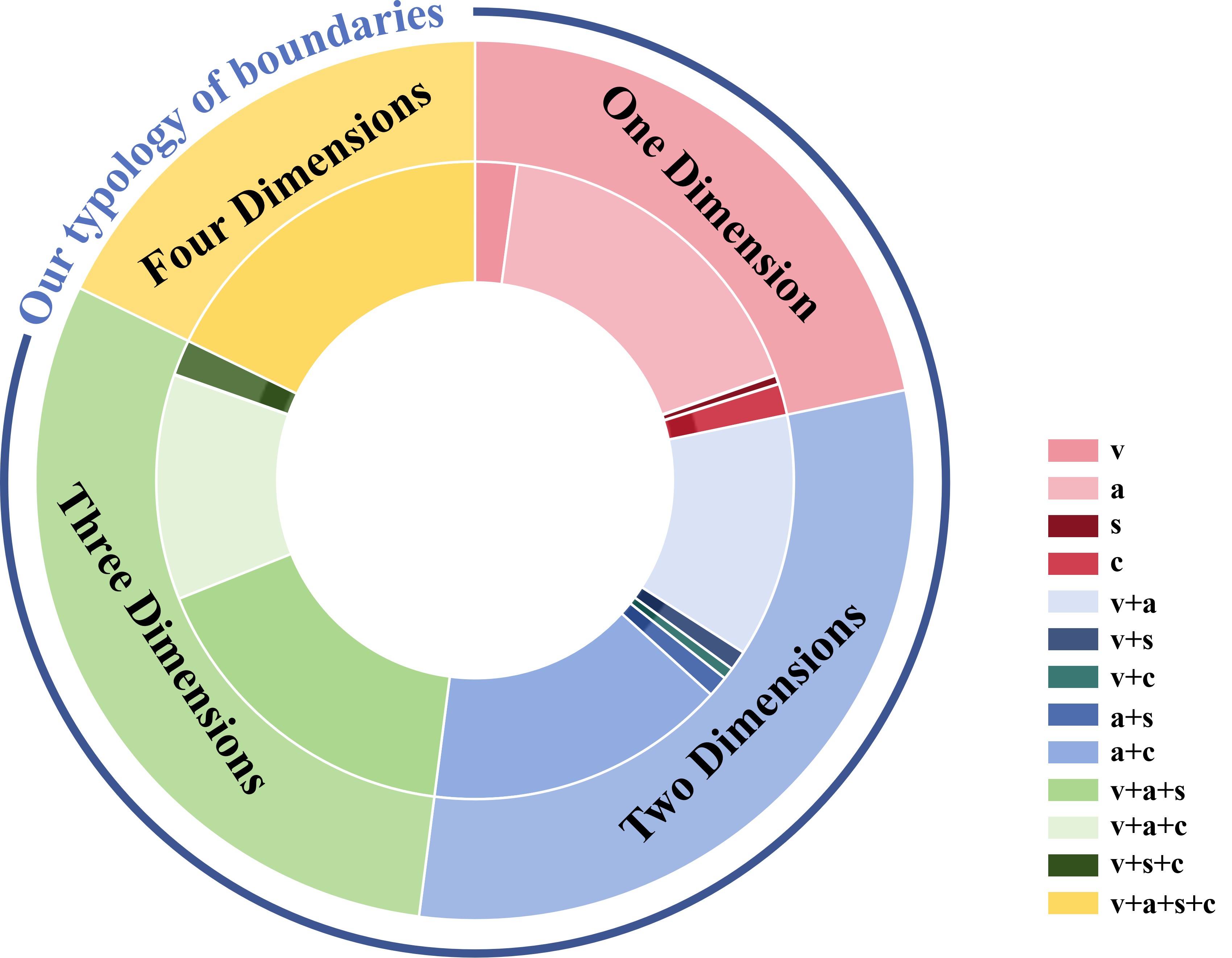
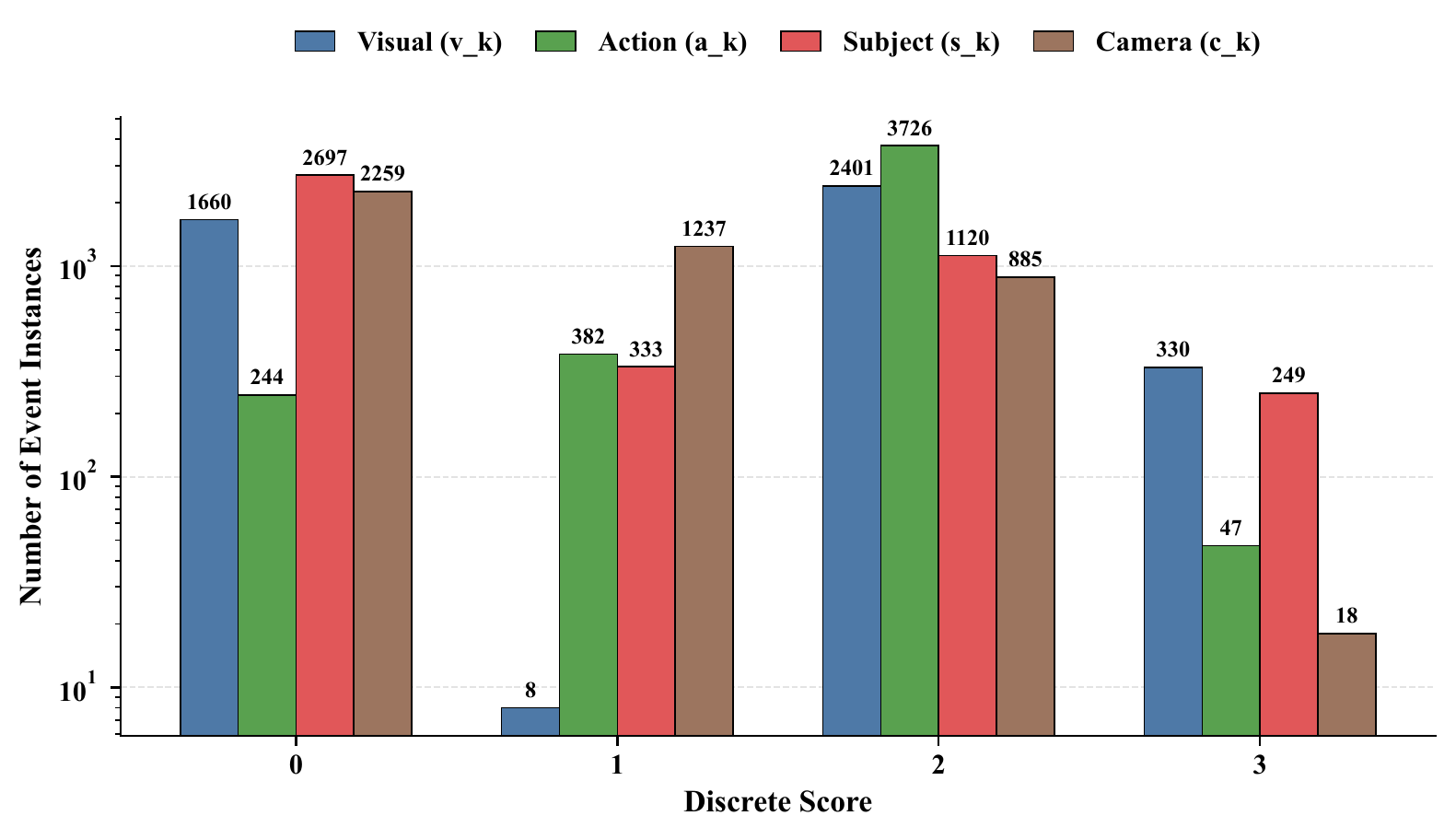
SemBound-1K models event transitions with continuous, semantically factorized, and explicitly noise-aware supervision.
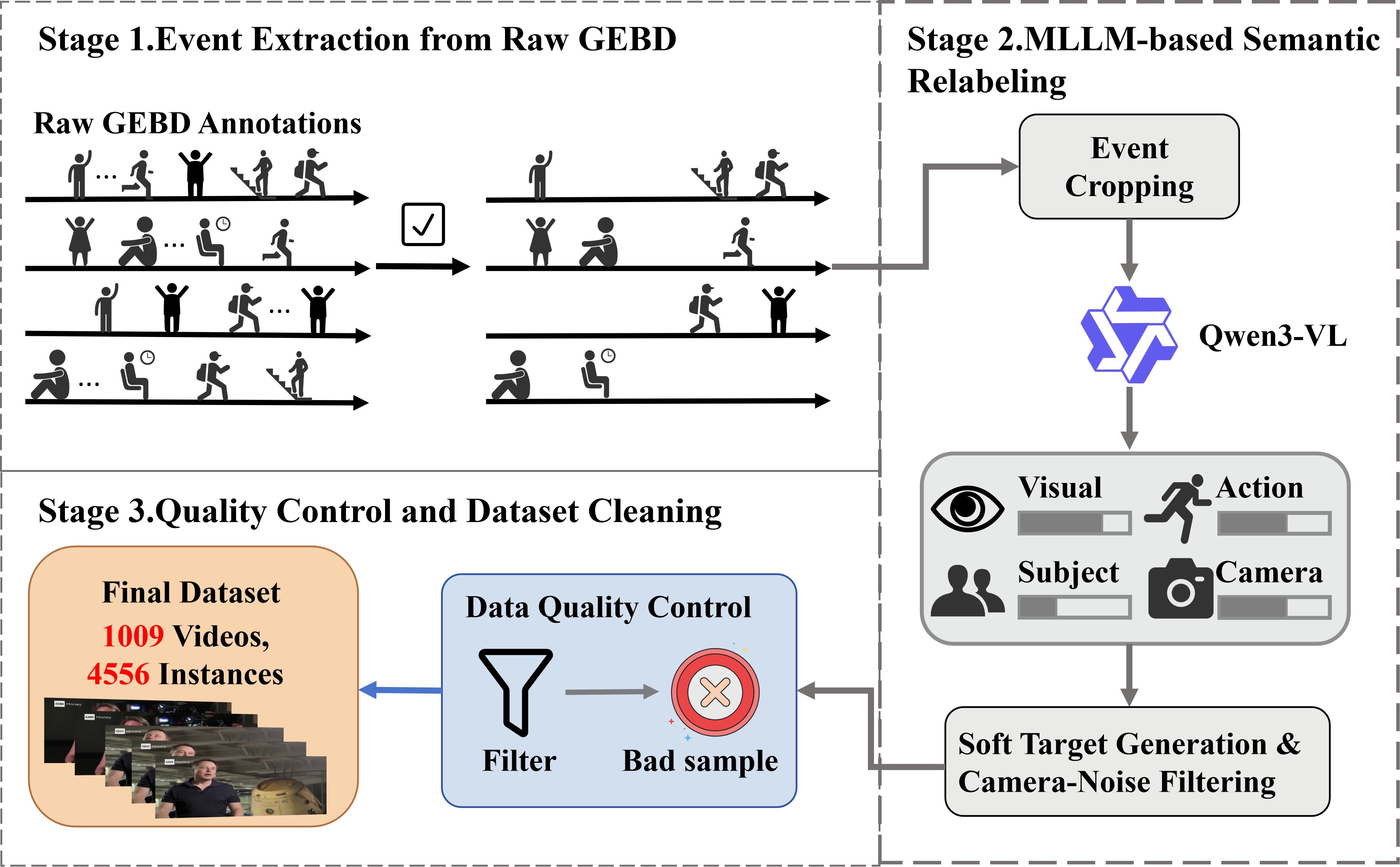
Candidate events are extracted from raw GEBD annotations, semantically relabeled along visual, action, subject, and camera dimensions, and cleaned through quality control to form the final dataset.
Experimental Results
SemStream is evaluated on general streaming, long-video, and autonomous-driving video benchmarks.
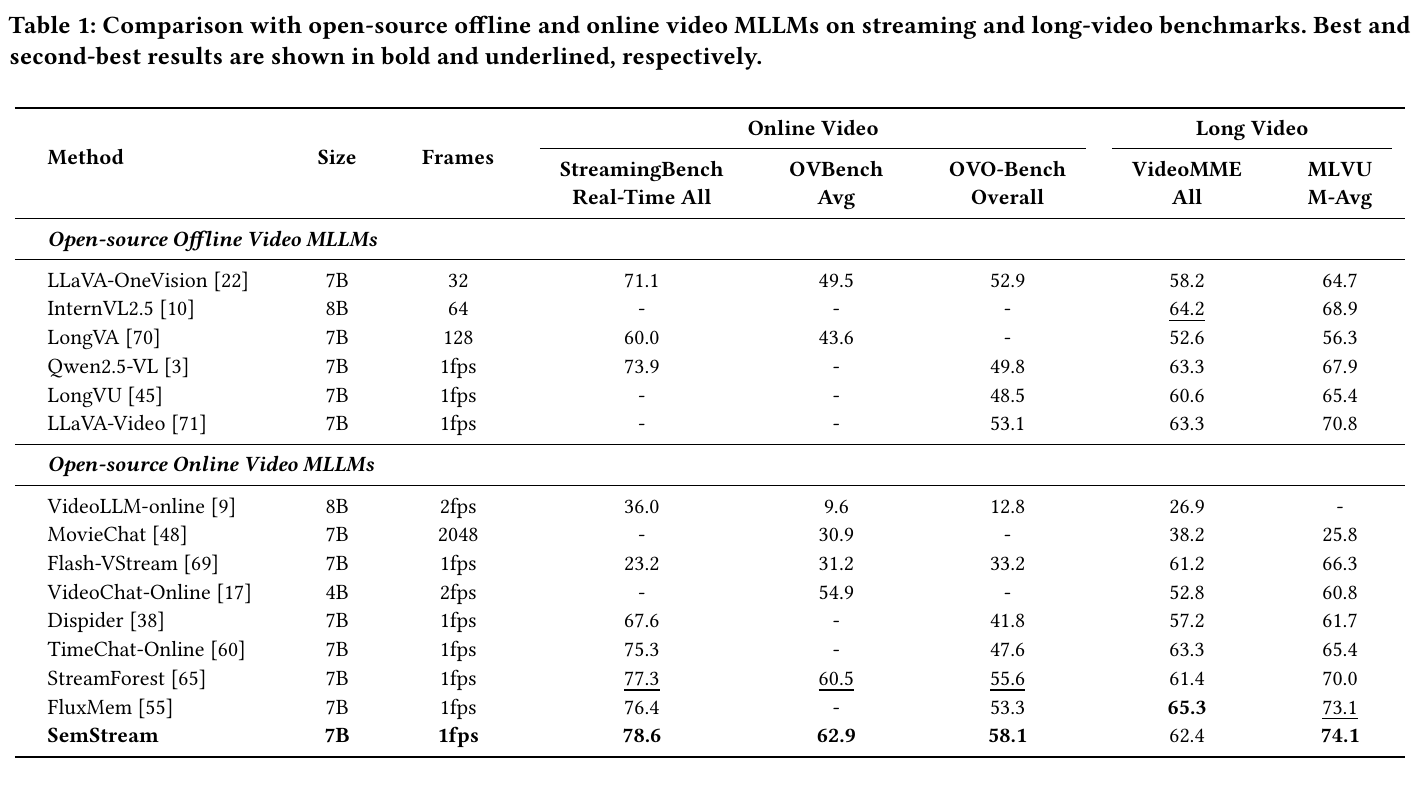
SemStream establishes state-of-the-art results on StreamingBench, OVBench, OVO-Bench, and MLVU while operating online at 1 frame per second.
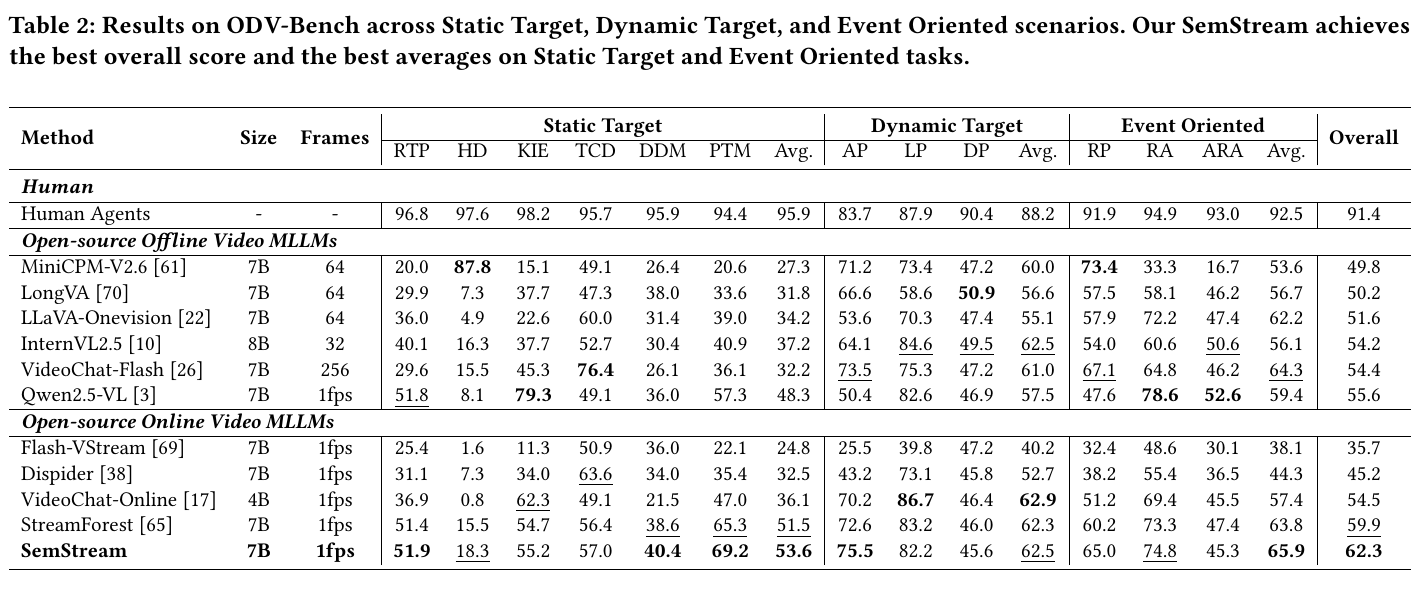
On ODV-Bench, SemStream achieves the best overall score and the best average results on Static Target and Event Oriented tasks.
Ablation Studies
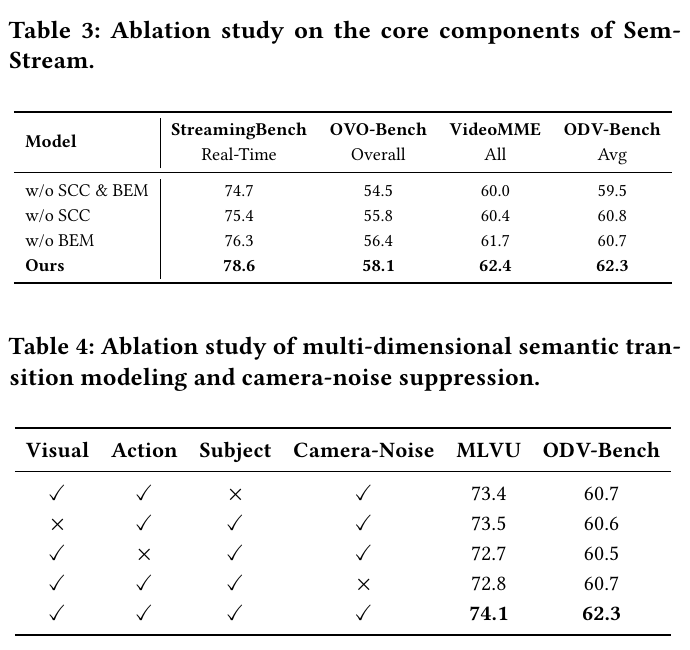
The ablations isolate the contributions of semantic boundary modeling, budgeted memory consolidation, and multi-dimensional supervision.
BibTeX
Acknowledgements
This work is supported by State Key Laboratory of Novel Software Technology, Nanjing University (KFKT2025A22).